
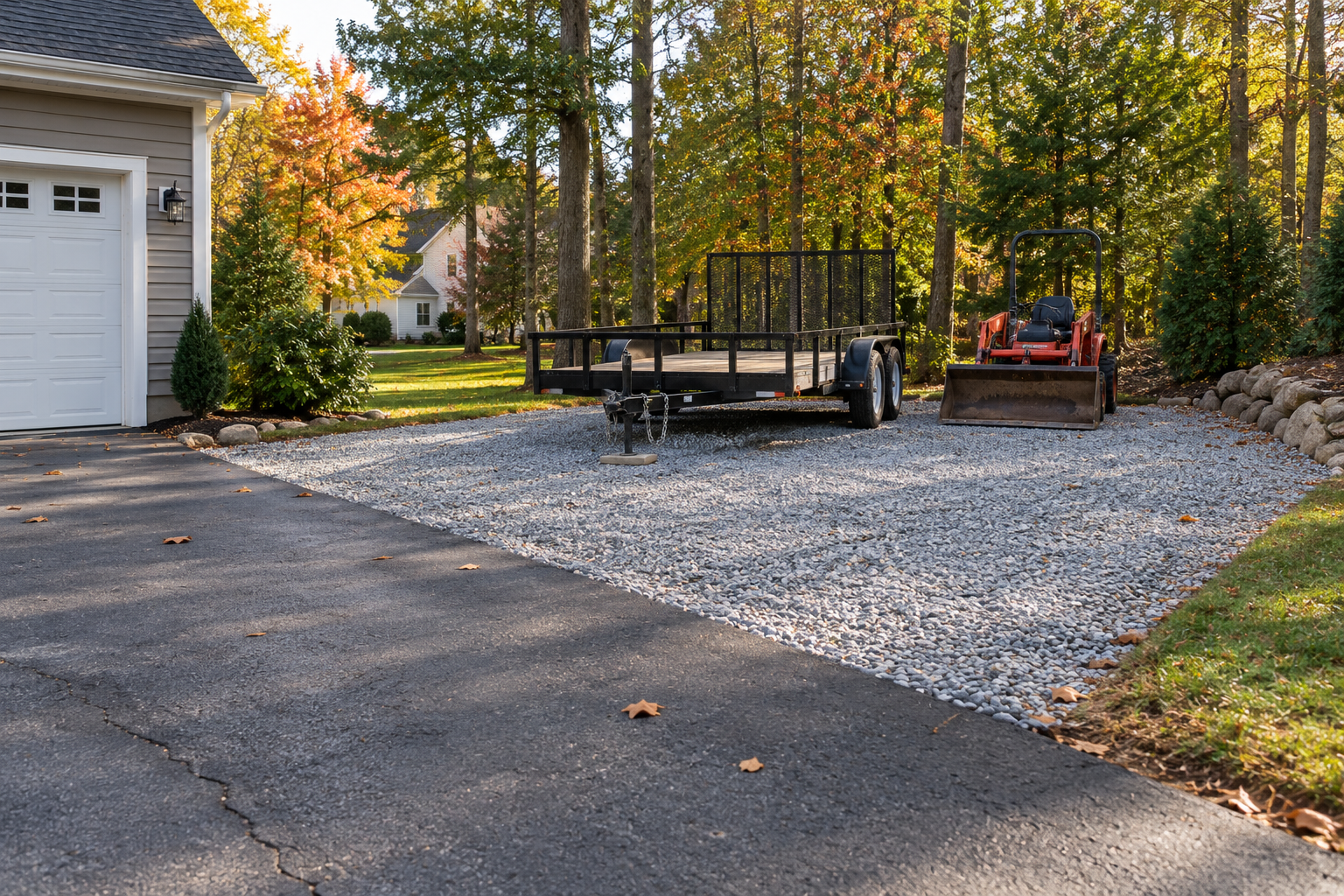
Converting a grassy area next to your driveway into a crushed stone parking pad involves cutting a defined entry off the existing pavement, removing and redistributing the lawn material, grading the area for proper drainage, and installing a layer of compacted crushed stone. Done right, it creates a durable, low-maintenance surface for vehicles, trailers, or equipment.
A homeowner in Auburn, NH recently called us wanting to do exactly this. They had a patch of lawn sitting right beside their paved driveway and needed a practical place to park trailers and equipment. Their plan was smart: cut a clean entry off the driveway, level out the adjacent area, and cover the whole thing in crushed stone. It’s a project we handle regularly, and the results are both functional and clean-looking.
At Trimmers Landscaping, we work with homeowners across southern New Hampshire on exactly these kinds of practical yard improvements. Here’s how the process works from start to finish.
What Does It Take to Cut an Entry Off an Existing Paved Driveway?
Cutting a new entry off an existing paved driveway requires sawcutting or removing a section of the existing edge, then establishing a defined transition between the pavement and the new stone area. The width of the cut depends on how you plan to use the space. If you’re backing in a trailer or a larger vehicle, a wider opening gives you more room to maneuver without clipping the edge.
The transition point matters more than most people realize. A clean edge where the pavement meets the stone prevents crumbling over time and keeps the two surfaces from working against each other. We take time to set that boundary properly before any grading or stone work begins.
How Is the Lawn Area Prepared Before Stone Goes Down?
The existing lawn material is stripped and, when possible, redistributed to low or uneven spots elsewhere on the property before the area is graded and compacted. This is actually one of the advantages of this type of project. The displaced soil and organics don’t have to go to waste. They can be used to level out nearby areas that may have settled or eroded over time.
Once the material is cleared and redistributed, the base is graded to ensure water drains away from your driveway and any nearby structures. A flat-looking surface that holds water is a problem waiting to happen. Proper grading is what separates a parking area that lasts from one that turns into a muddy mess.
Our residential landscaping team handles the full scope of this work, from initial excavation through final stone placement.
What Size Parking Pad Makes Sense for Trailers and Equipment?
For most homeowners parking one or two trailers along with other equipment, a parking area in the range of 20 by 40 feet gives you enough room to maneuver without feeling cramped. The entry cut off the driveway is typically narrower, somewhere in the 10 to 14 foot range, so you have a defined throat that opens into a larger flat area behind it.
Think of it like a driveway apron that leads into a dedicated yard. You back in through the entry, and the wider area behind it gives you room to position things without tight maneuvering. The exact dimensions depend on what you’re parking and how much space you have available on your property.
If you’re not sure what size makes sense for your situation, our team can walk the property with you and help you figure it out. Learn more about our team and how we approach these estimates.
Why Is Crushed Stone a Good Choice for This Kind of Parking Area?
Crushed stone drains well, holds up under heavy loads, and requires far less maintenance than asphalt or concrete for secondary parking areas. It’s also more affordable to install and easier to add to or adjust later if your needs change.
For areas where you’re parking trailers, boats, or equipment rather than daily drivers, crushed stone is often the most practical choice. It handles weight well when properly compacted, and it won’t crack or heave the way hard surfaces can. Over time, it may need a top-off, but that’s a simple fix compared to repairing asphalt.
Frequently Asked Questions
Do I need a permit to add a crushed stone parking pad in New Hampshire?
In most cases, a small residential stone parking area does not require a building permit, but it can depend on your town’s zoning rules and whether any stormwater runoff is affected. We recommend checking with your local municipality before starting. We can help flag any potential concerns during the estimate process.
How do I keep the crushed stone from spreading into my lawn or driveway over time?
Edge restraints or a defined border along the perimeter help contain the stone. We typically establish a clean boundary at the entry point and along the outer edges of the parking area so the stone stays where it belongs. Over time, some minor redistribution is normal, but a well-installed border minimizes it significantly.
Can the soil removed from the lawn area be reused on my property?
Yes, in most cases it can. If you have low spots in your yard, areas that have settled near a foundation, or spots where you want to build up the grade slightly, the displaced material from your parking pad project can often be repurposed right on site. It’s something we discuss during the estimate so nothing goes to waste.
If you’re thinking about a project like this, the best next step is to have someone walk the property with you and take a look at what you’re working with. Contact us to schedule an estimate and we’ll help you figure out the right approach for your specific setup.
Ready to Add a Stone Parking Pad to Your Property in Auburn, NH?
Whether you need a small turnaround off your driveway or a full equipment parking area, we can help you plan and build it. Trimmers Landscaping works with homeowners throughout Auburn, NH and the surrounding area on practical yard projects like this one. Reach out today to get an estimate and take the first step toward a cleaner, more functional property.


