
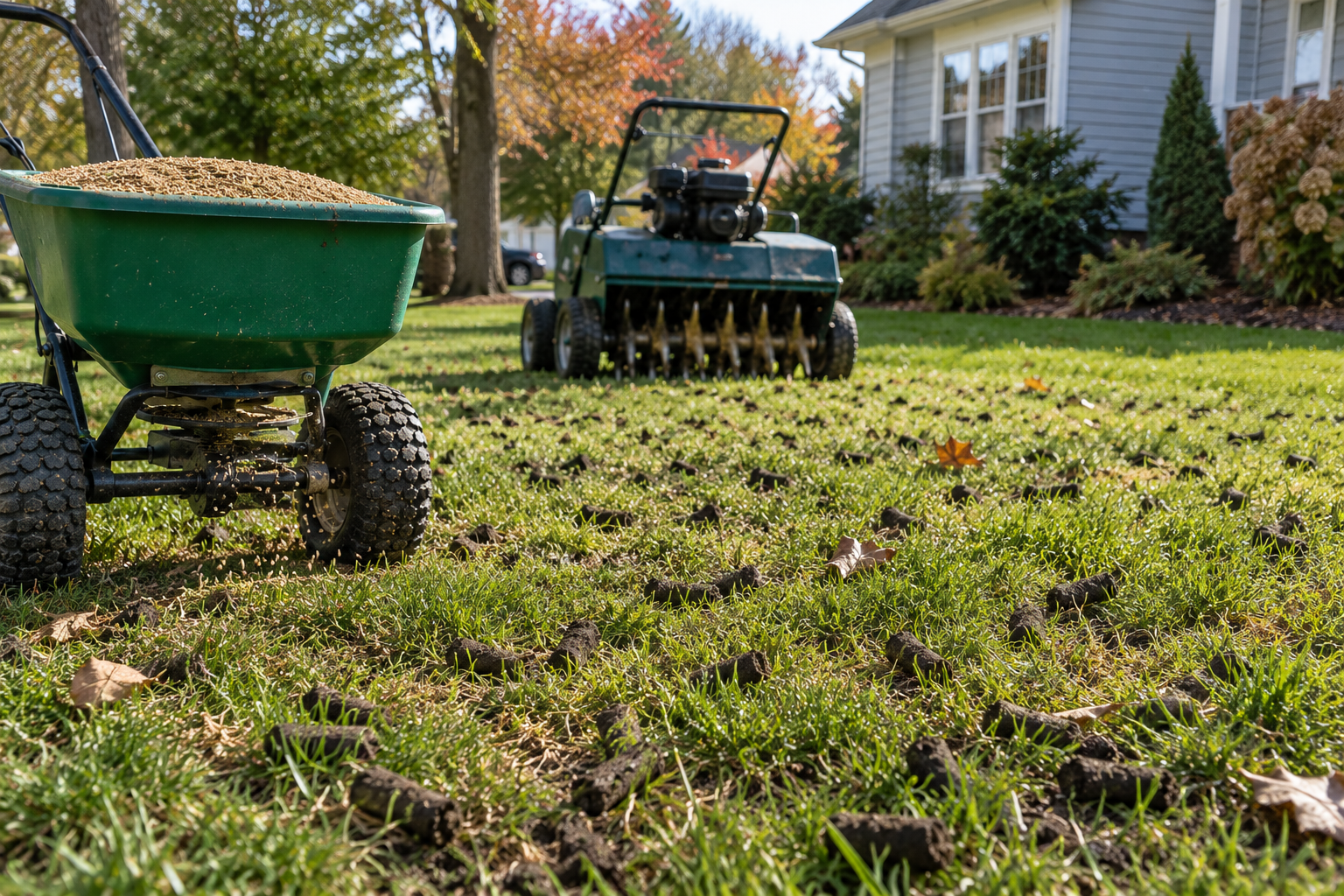
No, you should not mow right after aeration and overseeding. Mowing too soon can pull seeds out of the aeration holes before they have a chance to germinate. Give the seed time to settle and make contact with the soil, and hold off on mowing for at least a week to ten days after the treatment.
A homeowner in Hudson, NH recently called us after realizing their mow was scheduled for the same day as their aeration and overseeding. It was a great catch. If the mower had gone over that lawn, the rotating blades could have vacuumed up a significant portion of the seed before it ever had a chance to take root.
This is a timing mistake that happens more often than you might think, and it can quietly undermine an otherwise solid lawn renovation. Here is what you need to know.
Why does mowing after overseeding cause a problem?
Lawn mower decks create suction and turbulence that can lift loose seeds right off the surface before they germinate. During aeration, small plugs are pulled from the soil, leaving open holes throughout the lawn. Those holes are exactly where the seed is supposed to land and settle. When a mower passes over the area, it can dislodge seeds that have not yet made firm contact with the soil and pull them into the bag or scatter them unevenly.
The result? Thin, patchy germination in areas that should have filled in nicely. You end up with bare spots even though you paid for a full overseeding treatment.
How long should you wait before mowing after aeration and overseeding?
A general rule of thumb is to wait until the new grass seedlings are visibly established before running a mower over the lawn. That typically means the new growth has reached a mowable height and the seed has had time to anchor itself in the soil. Rain and irrigation help accelerate that process by pushing seeds down into the aeration holes.
If you have an irrigation system, keep it running on a light, frequent schedule after overseeding to keep the seed moist without washing it away. If rain is in the forecast, even better. Nature does a great job of settling seed into the soil.
Yes, the grass will get a little longer than you might like during the waiting period. That is completely fine. A slightly overgrown lawn for a week or two is a small price to pay for a thick, healthy stand of new turf.
What should you tell your lawn care crew after overseeding?
Always notify your lawn care team right away if an overseeding was done on or near your regular mow day. A good crew can quickly adjust the schedule to skip your property until the seed has had time to settle. Communication is key here, especially if your mowing and lawn renovation services are handled by the same company.
At Trimmers Landscaping, our team coordinates between services so that aeration and overseeding work is not undone by a routine mow. If you are ever unsure, just call us and we will sort out the timing.
You can learn more about how we approach this kind of work on our lawn renovation page, which covers the full process from aeration through to healthy turf recovery.
Are there other mistakes to avoid after aeration and overseeding?
Yes, a few common missteps can reduce the effectiveness of your overseeding investment. Here are the ones we see most often:
- Letting the seed dry out during the first few weeks of germination
- Applying fertilizer too aggressively right after seeding, which can burn young seedlings
- Allowing heavy foot traffic across the seeded area before the turf establishes
- Mowing too short on the first pass, which stresses new seedlings
Our experienced team walks homeowners through post-treatment care so none of these details get missed.
Frequently Asked Questions
Can I use my irrigation system right after aeration and overseeding?
Yes, and you should. Light, frequent watering helps push seeds into the aeration holes and keeps the germination zone moist. Avoid heavy watering cycles that could wash seed off sloped areas. Short cycles run multiple times a day are better than one long soak.
What happens to the aeration plugs left on the lawn?
Those small soil cores will break down naturally over time, especially after rain or irrigation. They return organic material to the lawn surface and are actually beneficial. Do not rake them up. Leave them in place and let them decompose on their own.
Is it okay to overseed without aerating first?
You can, but aeration significantly improves results. The holes created by aeration give seeds direct access to soil, better moisture, and protection from being displaced. Overseeding on a compacted or heavily thatched lawn without aerating first often produces uneven or disappointing results.
If you are thinking about scheduling aeration and overseeding for your lawn this season, contact us and we will walk you through the process and find the right timing for your property.
Ready to Get Your Hudson, NH Lawn on the Right Track?
Aeration and overseeding is one of the best investments you can make in your lawn, but only when the follow-up care is handled correctly. If you have questions about timing, mowing schedules, or what to expect after treatment, our team is here to help. Reach out to us at Trimmers Landscaping and let us put together a plan that works for your lawn in Hudson, NH.


