
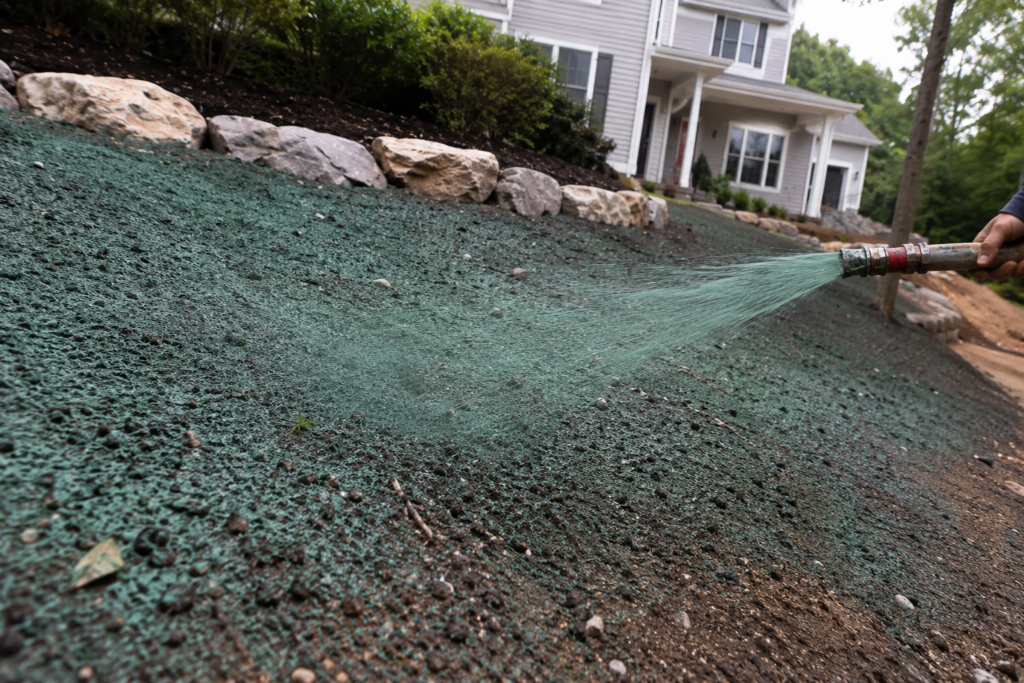
Hydroseeding is a lawn establishment method where grass seed, mulch, fertilizer, and a tackifier are mixed with water and sprayed directly onto bare soil. It is one of the most effective ways to establish grass on freshly loamed ground, slopes, or large open areas where hand-seeding would be impractical.
We recently heard from a property manager in Derry, NH who needed hydroseeding done around a newly constructed parking area. The loam was down, the area was ready, and they wanted to know what the process looked like and what would be in the mix. It is a question we get often, and the answer is worth spelling out clearly.
At Trimmers Landscaping, we handle hydroseeding for both residential and commercial properties throughout the region. Here is what you need to know before requesting a quote.
What Goes Into a Hydroseeding Mix?
A standard hydroseeding mix contains four core ingredients: grass seed, wood fiber mulch, starter fertilizer, and a tackifier. Each one plays a specific role in getting your lawn established.
- Grass seed: The seed blend is chosen based on the application. A park or turf mix is common for open areas and is designed to handle foot traffic and general use.
- Wood fiber mulch: This holds moisture around the seed and helps regulate soil temperature during germination.
- Starter fertilizer: Nutrients are baked right into the slurry so seedlings have what they need from the moment they start rooting.
- Tackifier: This is a bonding agent that helps the mulch layer stick to the soil so it does not wash away in rain or wind.
When someone says they want “standard issue” hydroseeding, this is exactly what they mean. No additives, no specialty blends. Just the four components working together to get grass growing fast on bare ground.
How Is Hydroseeding Different From Seeding by Hand or Laying Sod?
Hydroseeding covers large areas quickly and evenly in a way that hand-seeding simply cannot match, and it costs significantly less than sod while still delivering reliable results.
Hand-seeding can work well on small patches, but on areas of 10,000 square feet or more, coverage becomes inconsistent and erosion is a real concern. Sod gives you instant coverage but comes with a much higher price tag and is harder to install on irregular terrain or around structures like detention basins.
Hydroseeding hits a practical middle ground. The mulch layer protects the seed from washout, and the fertilizer gives seedlings a head start. For newly graded or loamed areas, it is usually the most sensible option. Learn more about what we offer through our lawn renovation services.
When Is Hydroseeding the Right Call for a Newly Loamed Area?
If your soil has been freshly graded, loamed, or disturbed by construction, hydroseeding is almost always the right first step.
Bare loam is vulnerable. Without vegetation, it erodes, compacts in rain, and becomes a muddy mess. Hydroseeding gets seed into the ground quickly and gives you a protective mulch layer while germination happens. It works especially well around hardscape projects like parking lots, retaining walls, and new drainage features.
The best windows for seeding in New England are late summer through early fall, and again in spring once soil temperatures climb. That said, the right timing depends on your specific site conditions. Contact us to talk through the details of your project and we can help you figure out the best approach.
Frequently Asked Questions About Hydroseeding
How much area does hydroseeding work for?
Hydroseeding is practical at almost any scale, but it really shines on larger areas where hand-seeding would be uneven and sod would be cost-prohibitive. Projects ranging from a few thousand square feet to several acres are well within the range of what a hydroseeding rig can handle efficiently.
Do I need to do anything after hydroseeding is done?
Watering is the most critical step after application. The mulch layer needs to stay moist while the seed germinates. Avoid heavy foot traffic on the area until the grass is well established, and hold off on mowing until the lawn reaches a healthy height.
Can hydroseeding be done near drainage features like detention basins?
Yes, and it is actually one of the best applications for it. The tackifier in the slurry helps hold the seed and mulch in place on slopes and around water management features where erosion risk is highest. Proper seed selection for those areas also matters, so let us know about any drainage features on your site when you reach out.
Get a Hydroseeding Quote in Derry, NH
If you have a newly loamed area that needs to be seeded, we are ready to take a look and put together a written quote. Our team has worked on projects of all sizes across Derry, NH and the surrounding communities. You can learn more about our background on our about us page, or explore our full range of residential landscaping services.
Ready to get started? Reach out to us today and we will get the right information over to our team so we can put a quote together for you.


