
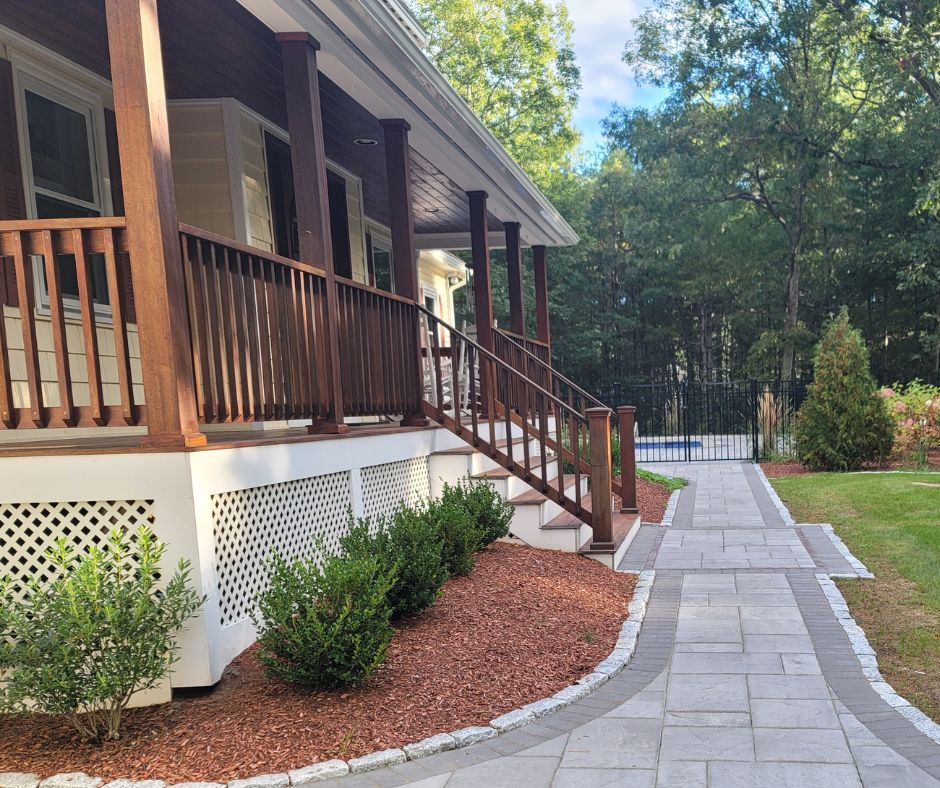
Mulching is one of the best ways to keep landscape beds healthy and attractive in Manchester, NH. Fresh mulch helps retain soil moisture during hot summers, reduce weed growth, protect plant roots during cold New Hampshire winters, and improve the overall appearance of your property. Many homeowners choose professional mulching services to keep their landscaping healthier, cleaner, and easier to maintain year-round.
What Does Mulch Actually Do for Your Landscape?
Mulch is a protective layer placed over the soil around plants, trees, and flower beds. Organic mulches such as bark, wood chips, pine straw, and shredded hardwood gradually break down over time and can improve soil quality while protecting your landscape.
When properly installed, mulch helps create a healthier growing environment for plants while also making landscape beds look cleaner and more polished.
How Does Mulch Help Retain Soil Moisture?
One of the biggest benefits of mulch is moisture retention. Mulch helps slow evaporation caused by sun exposure and wind, allowing the soil to stay consistently moist for longer periods.
This is especially important during hot summer months when plants can quickly become stressed from dry soil. By helping soil retain moisture, mulch can:
- Reduce the need for frequent watering
- Support healthier root growth
- Help plants better tolerate heat and drought conditions
- Prevent rapid swings in soil moisture levels
For many homeowners, this means healthier landscaping with less daily maintenance.
Does Mulch Help Prevent Weeds?
Yes. Mulch is one of the most effective natural ways to suppress weeds in landscape beds. A properly applied mulch layer blocks sunlight from reaching weed seeds, making it harder for them to germinate and grow.
While mulch will not eliminate every weed permanently, it can significantly reduce weed growth and make beds much easier to maintain.
For best results, existing weeds should be removed before installing fresh mulch.
Can Mulch Improve Soil Health?
Organic mulch can gradually improve soil as it decomposes. Materials like bark mulch, shredded leaves, and compost add organic matter back into the soil over time.
Healthy soil supports stronger root systems and better nutrient absorption for plants. Organic mulch may also:
- Improve soil structure
- Increase beneficial microbial activity
- Reduce soil compaction
- Help soil absorb water more effectively
This is one reason why mulching is considered an important part of long-term landscape maintenance.
How Does Mulch Protect Plants From Temperature Changes?
Mulch acts as insulation for the soil. During hot weather, it helps keep roots cooler. During colder months, it helps reduce rapid temperature fluctuations that can stress plants.
This added layer of protection can be especially beneficial for:
- Newly planted shrubs and trees
- Flower beds
- Sensitive plant roots
- Landscaping exposed to direct sun
Consistent soil temperatures help plants stay healthier throughout seasonal changes.
What Types of Mulch Are Commonly Used?
There are several common mulch options homeowners can choose from, each with different appearances and benefits.
Hardwood Mulch. Hardwood mulch is one of the most popular choices for landscape beds. It provides a natural appearance and breaks down gradually to enrich the soil.
Pine Bark Mulch. Pine bark mulch is lightweight, attractive, and often used around shrubs and ornamental beds.
Pine Straw. Pine straw is commonly used in landscaped areas because it is lightweight, easy to spread, and effective for erosion control.
Dyed Mulch. Black, brown, and red dyed mulches are popular for homeowners looking for a bold, finished appearance. Quality and material source matter when selecting dyed mulch products.
Stone or Gravel Mulch. Inorganic mulches like stone or gravel last longer but do not improve soil health because they do not decompose.
How Much Mulch Should Be Installed?
In most landscape beds, about 2 to 4 inches of mulch is recommended.
Too little mulch may not effectively suppress weeds or retain moisture. Too much mulch can trap excess moisture and reduce airflow to plant roots.
One common mistake homeowners make is piling mulch directly against tree trunks or plant stems. This can create moisture problems and increase the risk of rot or pest issues.
Frequently Asked Questions About Mulching
How often should mulch be replaced?
Most organic mulch should be refreshed every 1 to 2 years depending on weather conditions, fading, decomposition, and bed appearance.
Does mulch attract insects?
Properly installed mulch generally does not create pest problems. However, mulch should not be piled directly against your home’s foundation or tree trunks.
Is organic mulch better than rock mulch?
Organic mulch improves soil over time, while rock mulch lasts longer and requires less replacement. The best choice depends on your landscaping goals and plant types.
Can mulch help prevent erosion?
Yes. Mulch helps reduce soil erosion by minimizing runoff and protecting soil from heavy rain and wind exposure.
Keep Your Landscape Beds Healthy With Professional Mulching
Fresh mulch can dramatically improve the appearance, health, and protection of your landscape beds in Manchester, NH. Whether you want better weed control, healthier plants, or a cleaner finished look for your yard, professional mulching services can make a big difference throughout every New Hampshire season.
At Trimmer’s Landscaping, we help homeowners choose the right mulch solutions for their property and install them properly for long-lasting results. Contact us today to schedule your professional mulching services.


